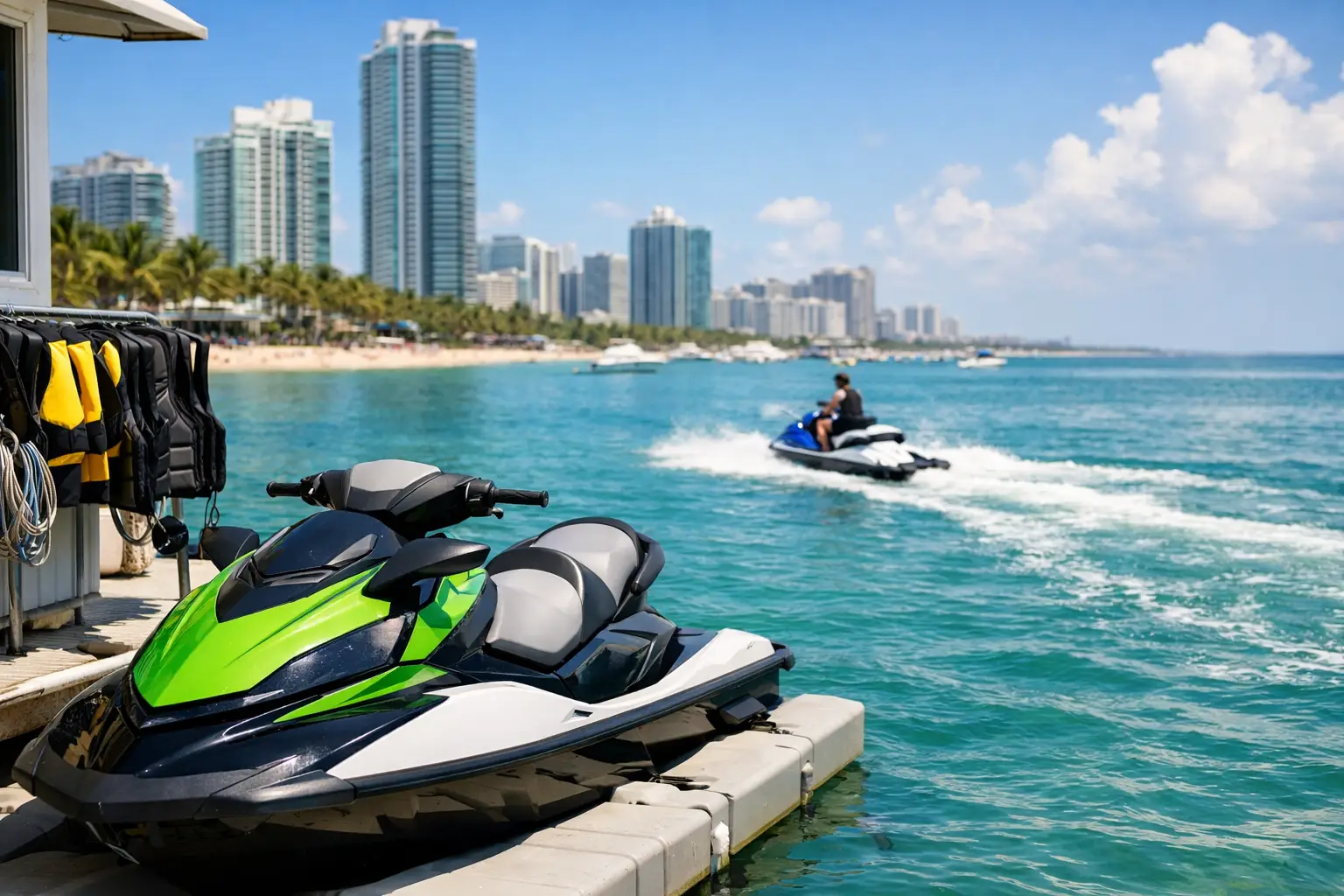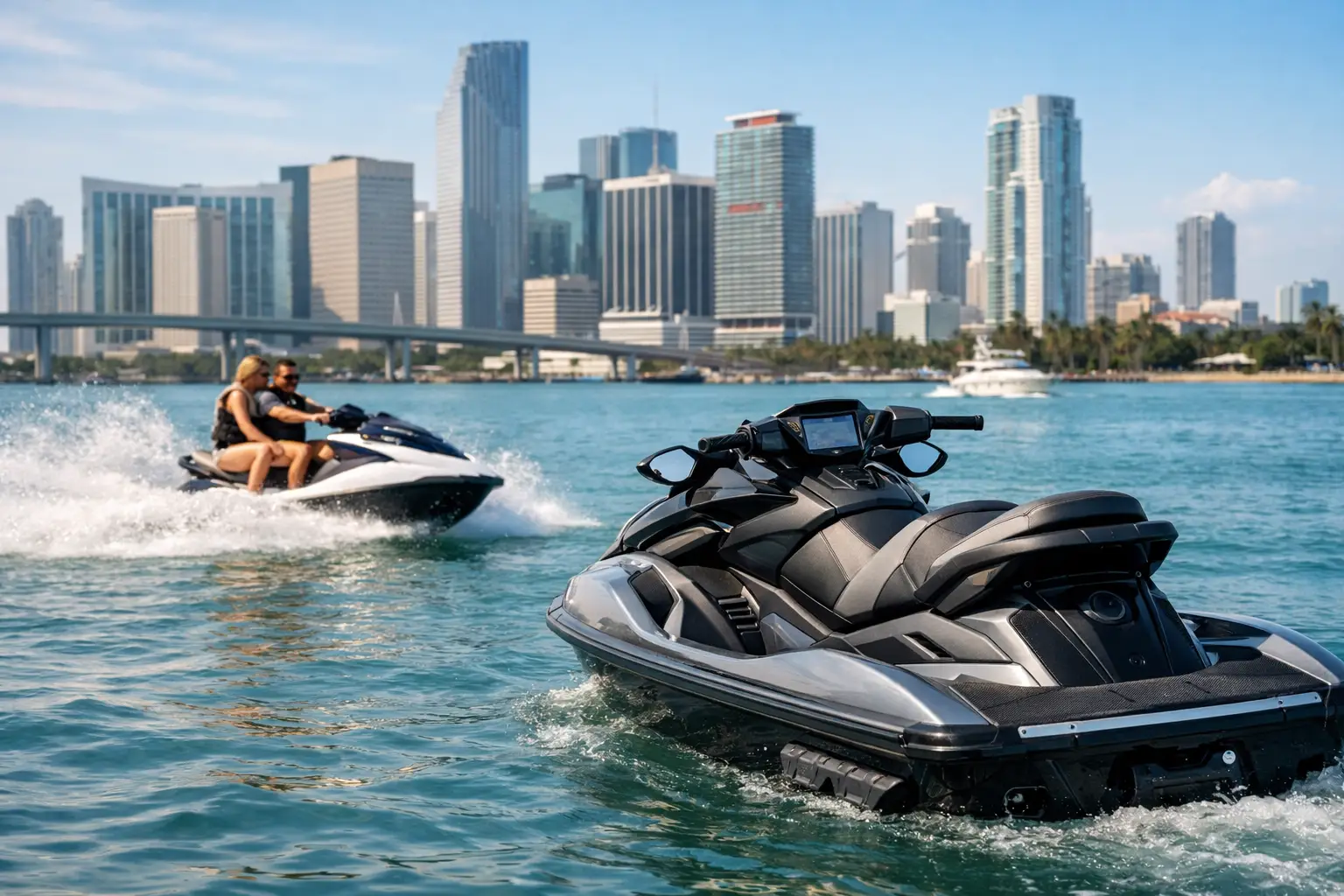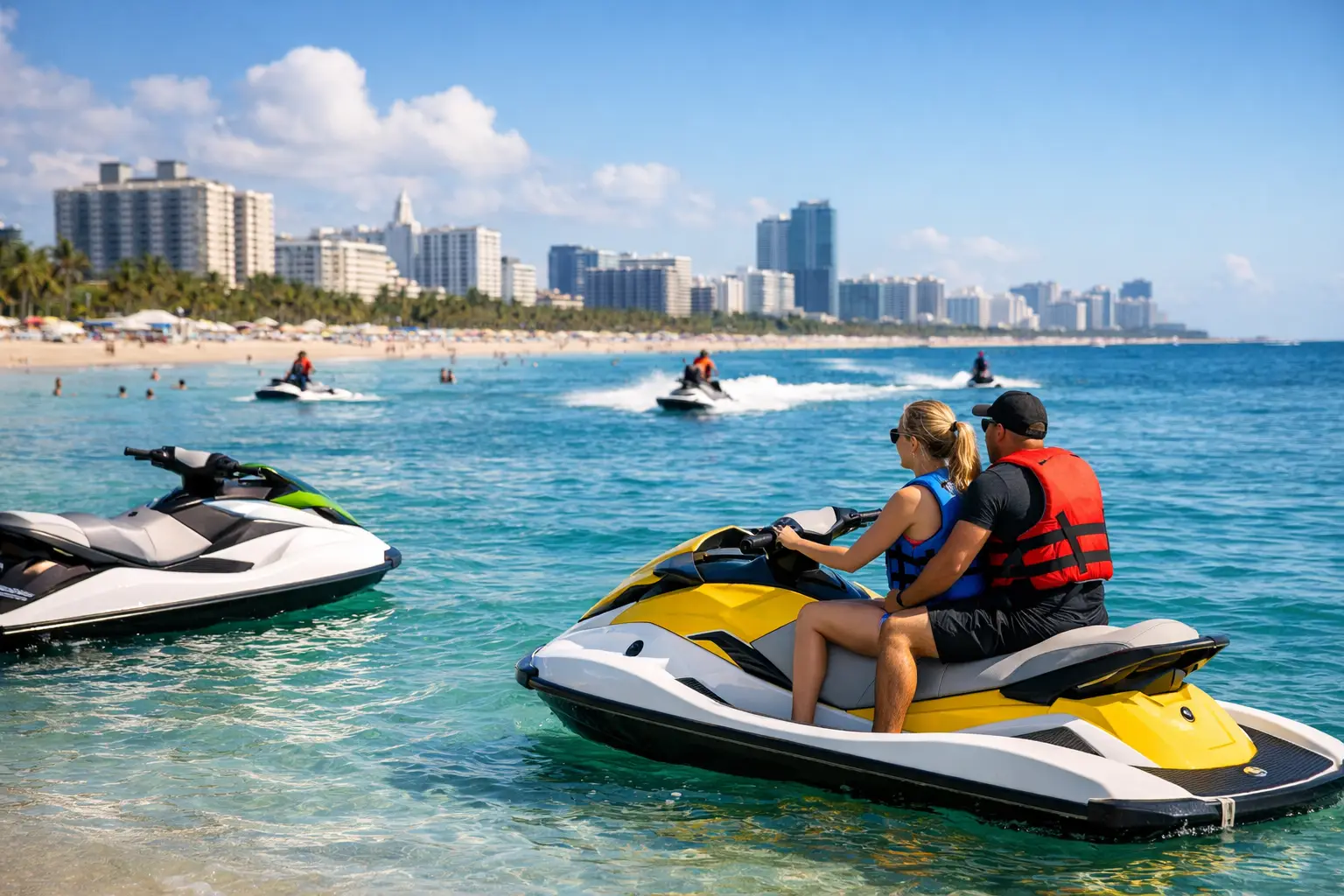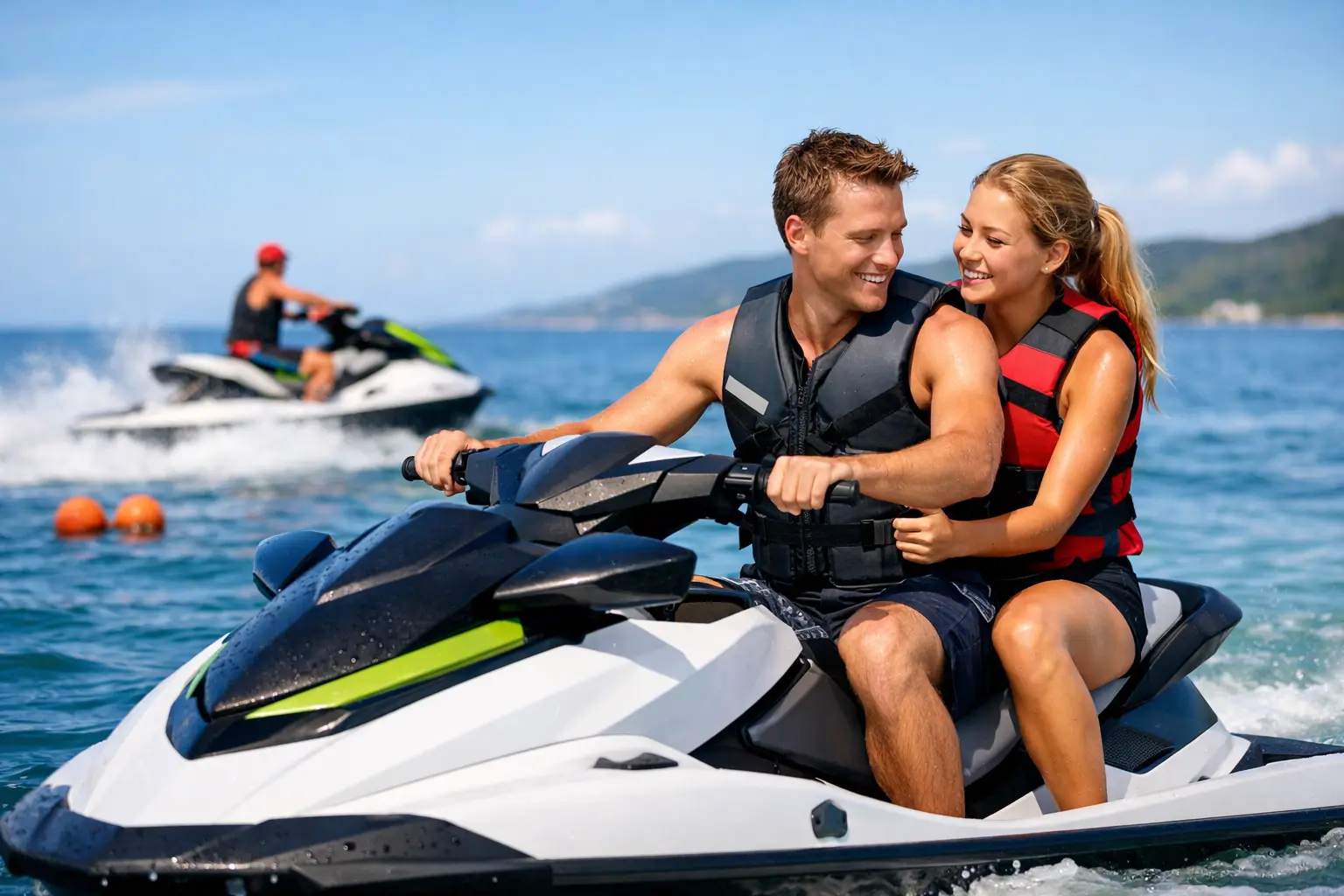
A first jet ski ride in Miami should feel like a vacation highlight, not a stressful test of your nerve. So, are jet skis safe for beginners? Yes, when the ride starts with a professional briefing, dependable equipment, the right conditions, and a rider who respects the water.
Jet skis are fast, responsive machines. That is exactly what makes them exciting - and why beginners need to approach their first ride with focus. You do not need previous experience to enjoy the freedom of a personal watercraft, but you do need to understand how it handles, where to look, and when to ease off the throttle.
Are Jet Skis Safe for Beginners With a Rental?
For most adults, a guided rental process makes a first-time ride far more manageable. A quality operator should explain the controls before you leave the dock, cover local riding expectations, provide required safety gear, and make sure you are comfortable before the experience begins.
The watercraft matters, too. Well-maintained Yamaha and Sea-Doo models offer stable platforms, predictable handling, and modern controls that make learning easier than trying to manage an older, poorly maintained machine. Stability does not remove every risk, but it gives beginners a better starting point while they learn how acceleration, turning, and wake conditions feel.
A smart rental setup also creates backup beyond the life jacket. a fully insured fleet, GPS tracking, and a clear process for getting help can remove much of the uncertainty that keeps first-timers on shore. At Jet Ski Miami 7, the goal is a premium Freedom Ride experience: real room to enjoy Miami’s water, paired with the operational safeguards riders should expect.
Still, no rental company can make unsafe decisions safe. The rider controls the throttle, chooses the following distance, and decides whether conditions feel right. That is where good judgment takes over.
What Makes a First Jet Ski Ride Safer
The biggest safety advantage is not being naturally fearless or athletic. It is starting slowly enough to understand the machine before you ask it for speed. New riders often expect jet skis to turn like cars. They do not. Personal watercraft need propulsion to steer, which means chopping the throttle in a panic can make it harder to change direction.
During a proper briefing, pay close attention to this point: look where you want to go, maintain controlled throttle when turning, and give yourself more room than you think you need. Smooth inputs beat sudden movements every time.
Water conditions also matter. A calm, clear day is generally friendlier for beginners than choppy water, heavy boat traffic, poor visibility, or strong wind. Miami can look calm from the beach while conditions farther out feel completely different. If you are nervous, say so before launching. A professional team can help you choose a comfortable pace and clarify what to expect.
Your passenger changes the equation as well. Riding with a friend can be part of the fun, but it requires more balance, more stopping distance, and more communication. First-time drivers should be especially conservative with speed when carrying someone else. The passenger should hold on securely, keep both feet planted, and avoid sudden leaning or movement while the jet ski is turning.
The Briefing Is Not the Part to Rush
You booked a high-thrill Miami experience, so it is tempting to nod through instructions and get to the fun. Do not. The safety briefing is where you learn the few details that can make the difference between a confident ride and a frustrating one.
You should leave knowing how to start and stop the craft, use the throttle, steer through a turn, maintain distance from other vessels, and respond if you fall off. You should also understand the boundaries and operating rules provided for your rental. Even a Freedom Ride is not permission to ignore navigational rules, other boaters, or instructions from the crew.
Ask questions if anything is unclear. There is no prize for pretending you already know how a personal watercraft works. A quick question at the dock is easier than guessing once you are moving across open water.
Four Habits That Keep Beginners in Control
Begin with a calm approach and build speed gradually. Take the first few minutes to feel the throttle response and practice broad, gentle turns in open water. The goal is not to prove how fast you can go. The goal is to become comfortable enough that speed feels like a choice, not a surprise.
Keep a generous buffer around boats, swimmers, docks, markers, and other jet skis. Watercraft can cover distance quickly, and wakes can shift your line without warning. More space gives you more time to react and makes every turn easier.
Stay alert instead of locking your attention on the horizon. Scan ahead, check the sides, and remain aware of changing traffic patterns. If another rider is nearby, avoid racing, cutting across their path, or following too closely just because everyone is excited.
Finally, wear the provided life jacket correctly for the entire ride. It is not a photo prop or an optional layer once the sun is out. A properly fitted personal flotation device is essential, even for strong swimmers, because an unexpected fall can leave little time to react.
What Beginners Should Avoid
Most preventable jet ski incidents come from a small set of decisions: going too fast for the conditions, turning too sharply, getting too close to other water users, or treating the ride like an open-road race. Miami’s water is built for excitement, but it is also shared by boats, paddleboarders, swimmers, and other personal watercraft.
Avoid alcohol or anything else that affects reaction time before riding. This is a straightforward rule with a major payoff. Balance, awareness, and quick decisions all matter more on the water than they may appear to from the dock.
Do not attempt stunts, aggressive wake jumps, or sharp maneuvers on your first ride. Those moves may look effortless in videos, but they require experience, timing, and room. A smooth, fast cruise through open water delivers plenty of adrenaline without adding unnecessary risk.
If the weather shifts, visibility drops, or you simply stop feeling confident, slow down and follow the instructions you were given for getting assistance. Choosing to reset is a strong decision, not a failure.
Is a Jet Ski Better for Some Beginners Than Others?
It depends. A first-time rider who listens carefully, stays sober, and is willing to start at a measured pace can have an excellent experience. Someone who is uncomfortable around water, has trouble following directions, or wants to push top speed immediately may need a different activity or more preparation.
Physical size is less important than awareness and control, although every rider should be able to maintain a secure seated position and operate the controls comfortably. Couples and friend groups should also decide in advance who will drive. Let the most focused person take the handlebars first, then switch only when everyone is stopped and stable according to the crew’s instructions.
For visitors, the best part is that you can enjoy the premium jet ski experience without owning, transporting, storing, or maintaining a watercraft. You get the performance and the Miami views, while an experienced rental team handles the equipment preparation and safety process.
Make Your First Ride the One You Talk About
A jet ski is safe for beginners when thrill is matched with preparation. Choose a reputable operator, listen closely to the briefing, wear your gear correctly, and give yourself permission to learn before you go fast. Miami’s water rewards riders who stay aware: you can chase the rush, enjoy the freedom, and still ride with the control that makes the experience worth repeating.