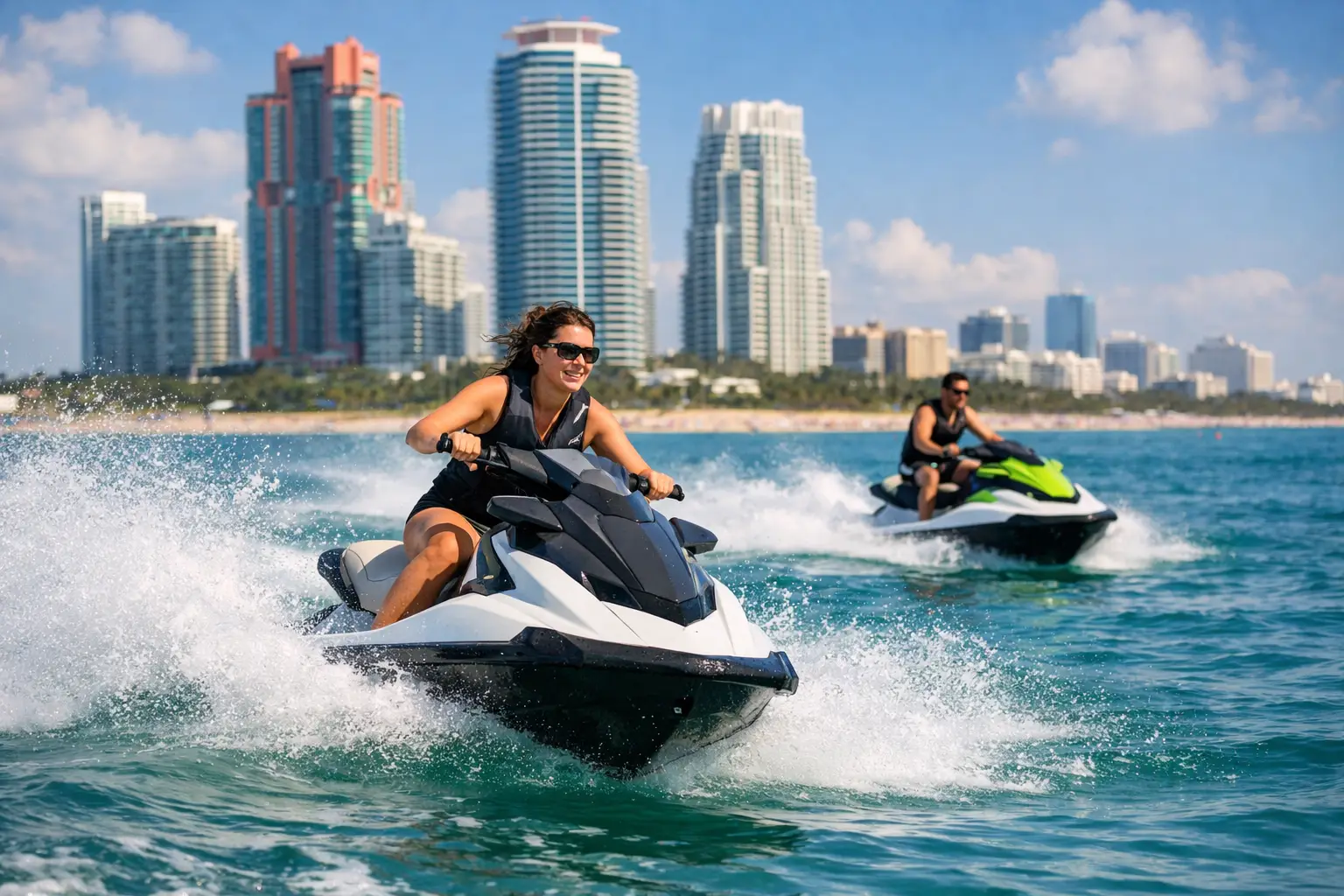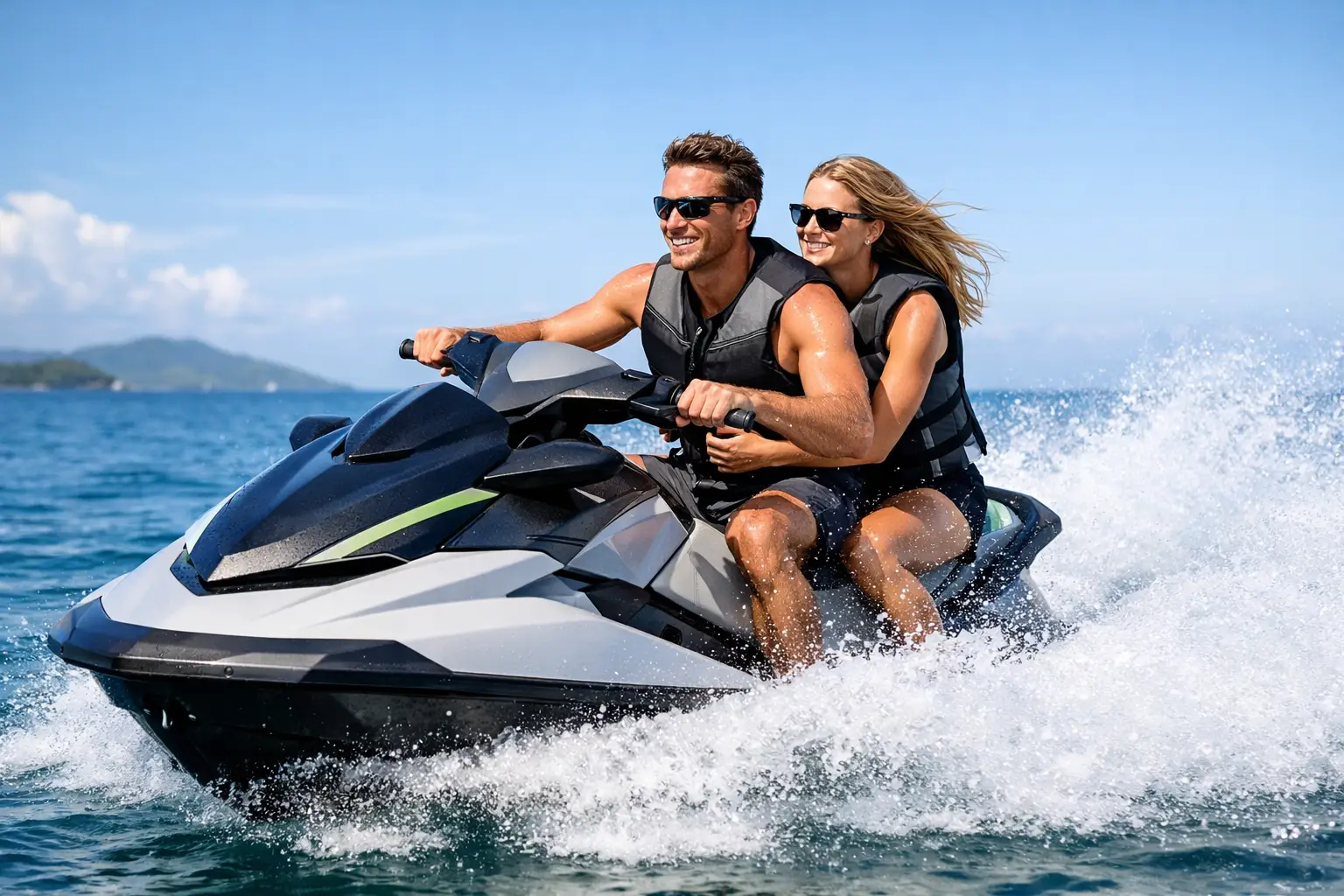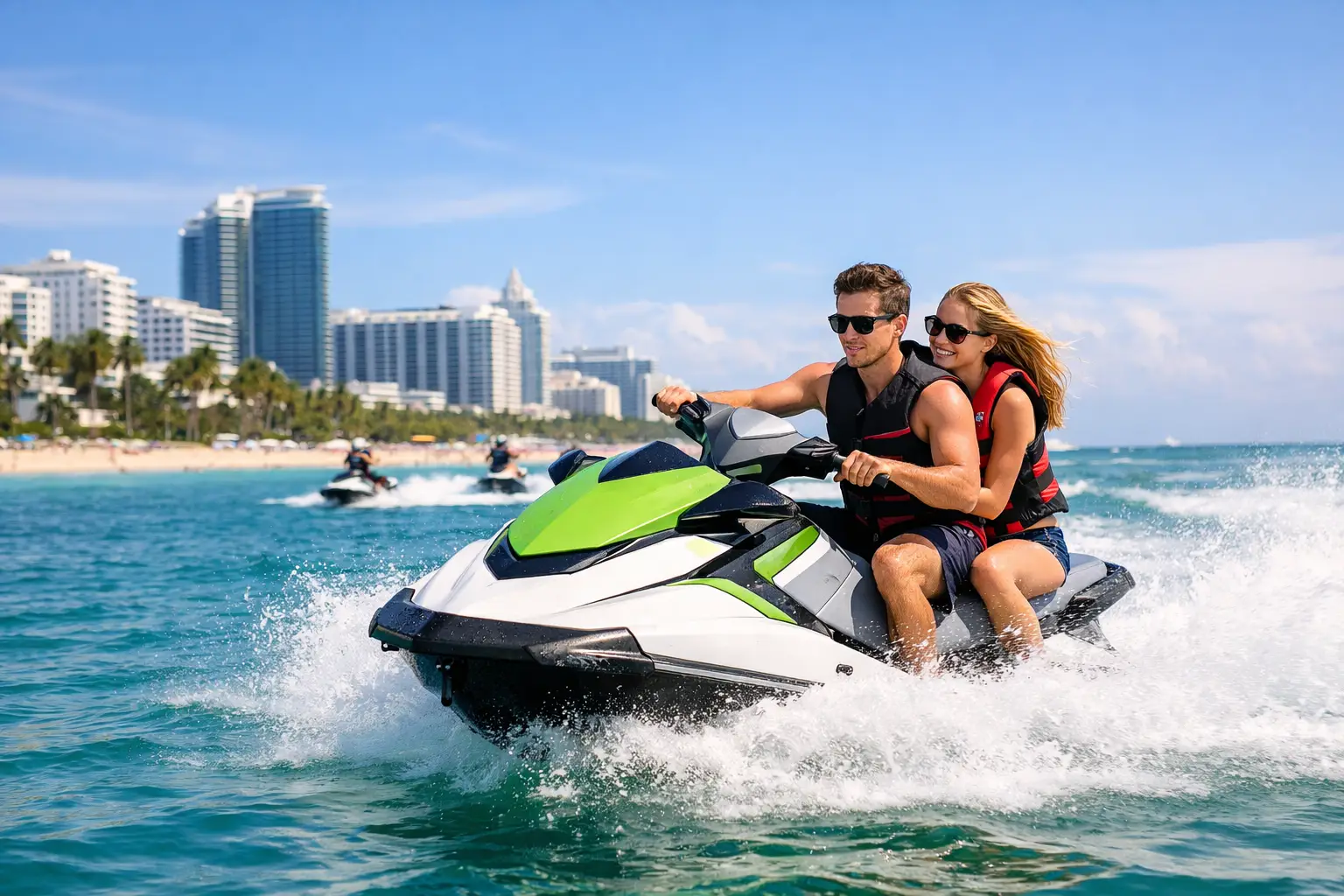
The best Miami Beach jet ski safety guide starts with one truth: a high-speed ride only feels free when you know exactly what you are doing. Biscayne Bay can look calm from the shore, but it is active water - with boats, changing weather, shallow areas, wildlife, and other riders sharing the view. A smart setup lets you spend less time worrying and more time enjoying the throttle.
A premium jet ski experience is not about being careless or boxed into a slow tourist loop. It is about riding a quality Yamaha or Sea-Doo machine, getting clear instructions, wearing the right gear, and knowing how to make fast decisions on the water. That is how a vacation highlight stays a great story for all the right reasons.
Start With the Right Rental and Briefing
Safety starts before the engine turns on. Choose an operator that maintains modern equipment, explains the ride clearly, and is transparent about what is included. A low advertised rate means little if it comes with surprise charges, worn equipment, vague insurance terms, or rushed instructions at the dock.
Before departure, listen to the full orientation. Even experienced riders should pay attention because local launch procedures, traffic patterns, weather conditions, and permitted riding areas can change. Ask where to go, where not to go, what landmarks to use, and how to contact the team if a problem comes up.
At Jet Ski Miami 7, riders get premium Yamaha and Sea-Doo equipment, a fully insured fleet, and GPS tracking designed to support a confident ride. GPS does not replace good judgment, but it adds an extra layer of operational awareness while you enjoy more freedom on the water.
If you were born on or after January 1, 1988, Florida may require you to carry proof that you completed an approved boating safety course or hold a valid equivalent credential when operating a personal watercraft. Rental staff can explain the current requirements for your booking, but do not wait until check-in to sort out eligibility. Bring a government-issued photo ID and any required boating safety documentation.
Wear the Gear That Gives You Options
A life jacket is not an accessory. It is the essential piece of equipment that keeps a surprise fall from becoming a serious emergency. Wear a properly fitted, U.S. Coast Guard-approved personal flotation device for the entire ride, not just while leaving the dock.
The right fit is snug without limiting your ability to move or breathe. Fasten every buckle, check that the jacket cannot ride up over your head, and make sure your passenger has an equally secure fit. If you are bringing sunglasses, use a retaining strap. If you wear a hat, expect it to fly unless it is secured.
A few small choices also improve comfort and control. Apply water-resistant sunscreen before you arrive, hydrate before riding, and wear swimwear or athletic clothing that stays comfortable when wet. Avoid loose scarves, bulky bags, and anything that can snag, shift, or distract you at speed.
Learn the Controls Before You Need Them
Jet skis are intuitive, but they are not toys. The throttle accelerates the craft, and steering works best when there is throttle applied. If you completely release the throttle while trying to turn, you may lose the steering response you expected. That detail matters most when you need to avoid another vessel or make a controlled turn.
Get comfortable with the safety lanyard, also called the engine cutoff switch. It should be attached to the operator so the engine stops if you fall off. Know how to restart the craft according to the instructions given during your briefing, and understand the correct way to reboard from the water.
Keep both hands on the handlebars whenever you are moving. Bring passengers only as permitted by the watercraft's seating capacity, and make sure they know to hold on, keep their feet in the footwells, and lean with you through turns. Sudden acceleration, sharp turns, and wake jumps are far less predictable with a passenger aboard.
The Miami Beach Jet Ski Safety Guide to Riding Smart
The fastest way to ruin a great ride is to treat open water like an empty racetrack. Miami Beach is surrounded by beautiful, busy water, and awareness is your advantage. Scan ahead constantly, check both sides before turning, and leave room for boats, swimmers, paddleboards, kayaks, and other personal watercraft.
Keep a safe distance from other vessels and never cut closely behind a boat. Its wake may look like a fun launch point, but the boat can change speed or direction, and its prop wash can make water conditions unpredictable. Crossing wakes at a controlled speed and angle is safer than hitting them aggressively.
Pay special attention near marinas, docks, channels, and shorelines. Boats may be backing out, navigating narrow space, or operating at reduced speed. Slow down where required and follow all posted markers, no-wake instructions, and directions from law enforcement or authorized staff.
Freedom riding means having room to enjoy the water - not ignoring the rules that keep it open. Local restrictions, temporary safety zones, weather advisories, and protected areas still apply. The best operators give you a less constrained experience while keeping you inside the rules that protect riders, boaters, and Miami's marine environment.
Speed Is a Choice, Not a Requirement
A premium jet ski has serious acceleration, which is part of the thrill. But the right speed depends on visibility, traffic, wind, water conditions, and your own experience. On a clear, open stretch with plenty of room, you can enjoy the performance. In choppy water, near other traffic, or when you are still getting comfortable, back off the throttle.
Wind can build quickly across the bay, turning smooth water into sharp chop. When conditions get rough, bend your knees slightly, maintain a relaxed grip, reduce speed, and give yourself more stopping distance. Do not try to prove anything to your friends, your passenger, or the rider next to you. The confident move is adjusting early.
Alcohol and jet skis do not mix. Operating a personal watercraft requires the same focus as operating any other motorized vessel. Save the drinks for after the ride, when everyone is safely back on shore and the only thing moving fast is the conversation.
Know What to Do if You Fall Off
Falling off can happen, especially when riders overcorrect, hit unexpected chop, or take a turn too fast. Stay calm, keep your life jacket on, and account for your passenger immediately. If the engine has stopped, use the safety lanyard and restart procedure explained in your orientation.
Approach the watercraft from the correct side as instructed by the rental team, then use the rear boarding area to climb back on. Reboard slowly and deliberately. Do not swim away from the craft unless there is an immediate danger, because the jet ski is easier for other boaters to see than a person in the water.
If you have a mechanical concern, feel disoriented, or see weather moving in, contact the rental operator right away. Do not continue riding just because the machine still runs. A quick check-in can prevent a small issue from becoming a long interruption to your day.
Make the Ride Better for Everyone
Respectful riding is part of the Miami Beach experience. Keep distance from swimmers and wildlife, avoid chasing marine animals, and watch for manatees and dolphins in calmer areas. Do not litter, and secure anything you bring so it does not end up in Biscayne Bay.
For couples and friend groups, agree on the plan before leaving. Decide who is driving first, how you will communicate if you separate, and where you will regroup. If one person is nervous, start with a slower pass near your group before opening up the pace. The goal is shared adrenaline, not leaving someone behind.
Your best ride is not measured by how reckless it looked on video. It is measured by the clear water, the clean acceleration, the skyline in the distance, and the confidence to enjoy every minute without second-guessing the next move. Book the premium machine, take the briefing seriously, and let Miami Beach deliver the speed, freedom, and memories you came for.