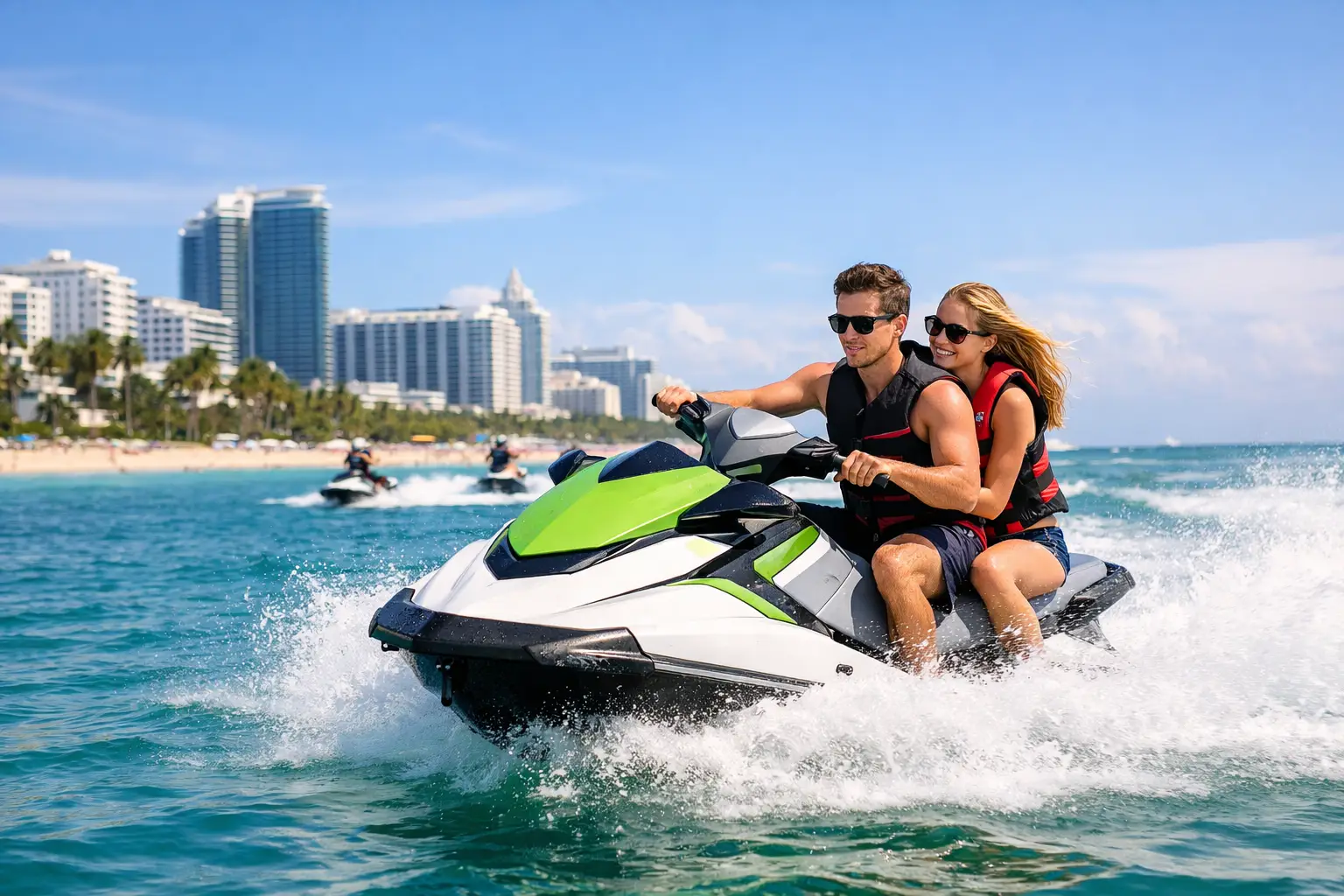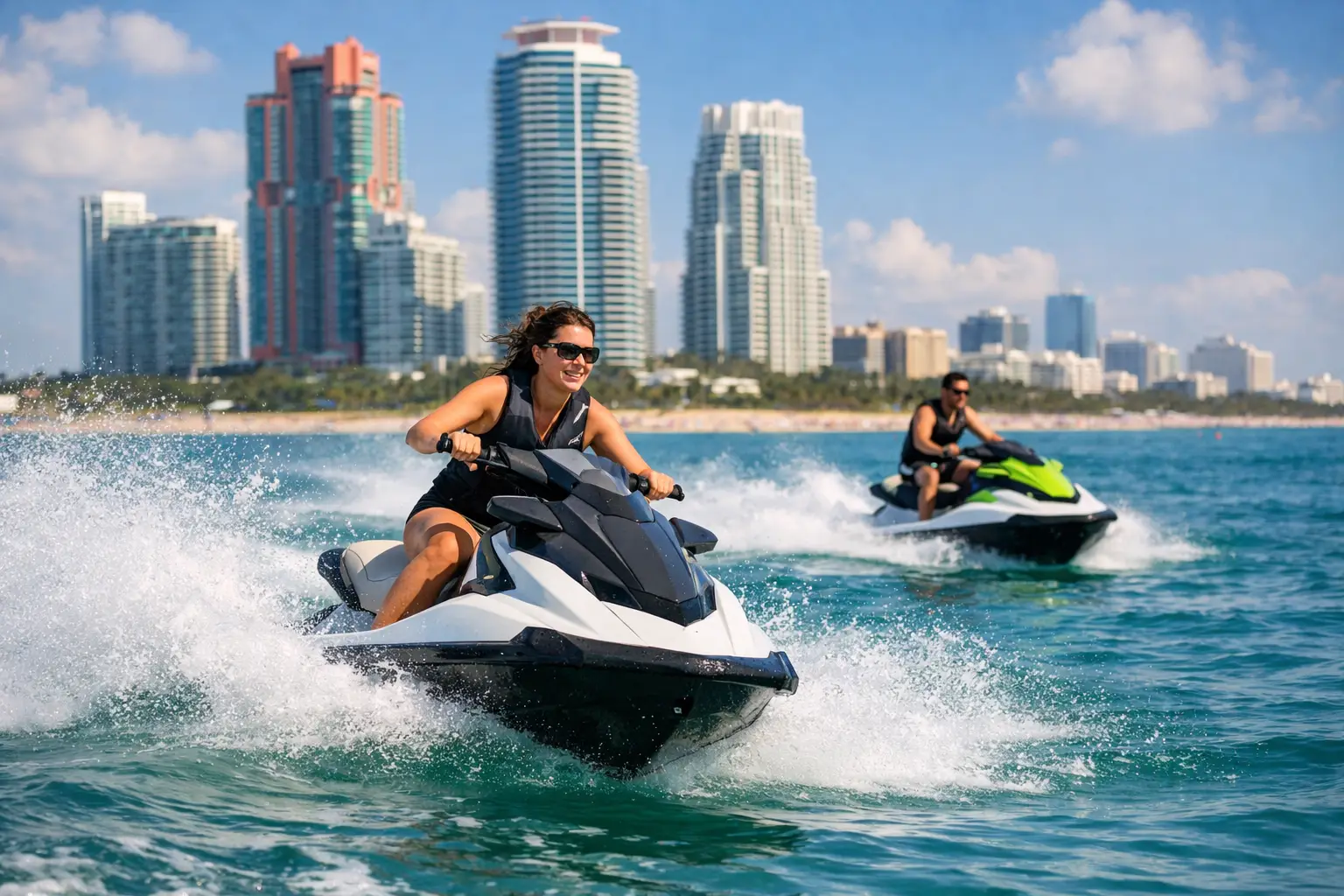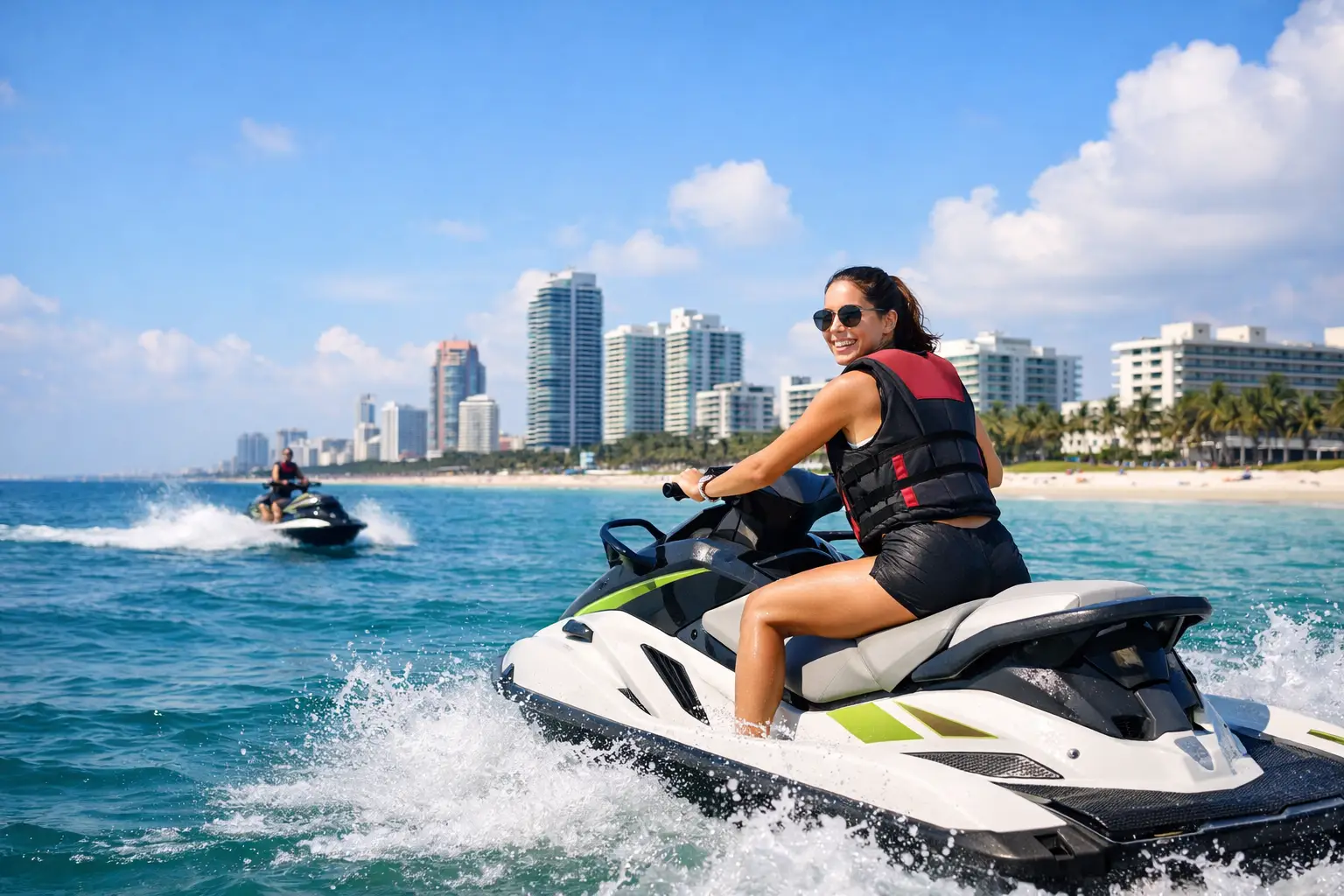
The first few seconds on a jet ski are pure adrenaline: the engine wakes up, the water opens ahead, and Miami Beach suddenly looks better from the bay. A first time jet ski rider guide should make that moment feel exciting, not uncertain. With the right briefing, a quality watercraft, and a little respect for the water, beginners can get comfortable fast and enjoy a ride that feels as free as it should.
Before You Ride: Set Yourself Up for a Great Hour
Your experience starts before the throttle moves. Arrive ready for the water in swimwear or quick-dry clothing, and bring sunscreen, sunglasses with a secure strap, and a waterproof case if you plan to carry a phone. Leave valuables behind whenever possible. A jet ski is built for action, not for keeping loose items safe.
Choose a rental operator that makes the basics clear upfront. Premium Yamaha and Sea-Doo models are designed for responsive handling and stable riding, but equipment is only one part of the experience. You also want a proper safety orientation, a fully insured fleet details explained clearly, and GPS tracking that supports a professionally managed ride.
For Miami Beach visitors, the best rental is not always the cheapest listing. Low teaser prices can become a different number after fees, fuel charges, insurance add-ons, or overly limited riding areas. Ask what is included, how long the actual ride time is, and whether there are restrictions that will affect the experience you came for.
The First Time Jet Ski Rider Guide to Basic Controls
A jet ski is more intuitive than many first-timers expect, but it does not handle like a car. You steer with the handlebars while applying gentle throttle. That last part matters: watercraft need propulsion to turn effectively. If you let off the throttle completely while trying to make a sharp turn, the jet ski will not respond as quickly as you may expect.
Start with both hands on the handlebars, feet planted in the footwells, and your body centered. Keep your knees soft rather than locked. That athletic stance helps you absorb small chop and stay balanced without fighting the machine.
Ease into the throttle. There is no prize for launching at full speed in the first minute. Spend time getting a feel for acceleration, turning radius, and the way the watercraft reacts to your body position. Once those movements feel natural, speed becomes more fun because it feels controlled.
When turning, look where you want to go. Your body naturally follows your eyes, which helps keep your turns smooth. Lean slightly into the turn, maintain enough throttle for steering response, and avoid abrupt handlebar movements. Big, deliberate motions are usually better than panicked corrections.
Safety Is What Keeps the Ride Fun
A life jacket is not optional equipment. Wear it correctly, make sure it is secure, and keep it on for the entire ride. The same goes for the safety briefing. Even confident swimmers and experienced drivers need to understand local conditions, navigation rules, operating boundaries, and what to do if they fall off.
Falling into the water is not a failure. It can happen, especially when learning in choppy conditions or making a sudden turn. If it does, stay calm, locate the jet ski, and follow the reboarding instructions from your briefing. Do not rush or pull yourself up from the wrong side. The correct method protects you and prevents the watercraft from rolling unnecessarily.
Keep a generous distance from other riders, boats, swimmers, docks, and wildlife. Water can make objects look farther away than they are, and another vessel's wake can change the surface quickly. Give yourself room to react. If you are riding with friends, avoid racing close together or cutting across another rider's path.
Alcohol and jet skis do not mix. Save the celebratory drinks for after the ride. Your reaction time, judgment, balance, and awareness all matter on the water, especially around boat traffic and changing conditions.
Read the Water Before You Open It Up
Miami's water can look calm from shore and feel completely different once you are out riding. Wind, boat wakes, tide, and traffic can create changing conditions within a single hour. Pay attention to the briefing, then keep scanning while you ride.
Flat water is ideal for learning throttle control and wide turns. Choppier water can be thrilling, but it requires a looser stance, more space, and a little less speed until you know how the jet ski reacts. Stand or slightly lift your weight through larger wakes if instructed, and cross wakes at a controlled angle rather than hitting them sideways at speed.
Sun glare is another Miami reality. Wear secure eyewear if it helps you see clearly, and never assume someone else sees you. Stay alert for boats entering your area, changing directions, or creating a wake behind them.
A Freedom Ride experience with no restrictive tourist-style zones can make the day feel bigger, but freedom always comes with responsibility. Follow the operator's route guidance, obey local boating rules, respect marked areas, and stay within the operational limits explained at check-in. More room to ride means more reason to ride smart.
How to Ride With Confidence, Not Tension
New riders often make the same mistake: gripping the handlebars too tightly. A death grip tires your arms and makes every little bump feel bigger. Hold on firmly, but let your elbows bend and let your lower body do part of the work.
Build speed in stages. Start slow, make a few wide turns, test how the jet ski responds, then increase your pace when the water and your comfort level allow it. If the surface gets rough or traffic gets closer, back off the throttle. Knowing when to slow down is part of riding confidently, not a sign that you are less adventurous.
Riding with a passenger changes the feel of the watercraft. The driver should be the more confident rider, while the passenger holds on securely and follows the driver's movement through turns. Keep your pace more moderate than you would solo, especially during the first ten minutes. The extra weight affects acceleration, braking distance, and balance.
If you want photos, take them only when stopped in a safe, permitted area or let your group capture the action from a distance. Trying to manage a phone while moving takes attention away from the water. The best memories come from being fully in the ride anyway.
What a Premium Rental Experience Should Include
For a first ride, convenience is more valuable than complicated paperwork and surprise charges. You should know the starting price, what insurance coverage is included, what you are responsible for, and what happens if weather changes the plan. Clear answers remove the guesswork and let you focus on the water.
At Jet Ski Miami 7, rentals start at $189 per hour and center on premium branded watercraft, a fully insured fleet, GPS tracking, and an open-water experience built for riders who want more than a quick loop near the dock. That combination matters for first-timers because a better machine and a clear process create more confidence from the start.
It is still smart to match the session to your group. Couples may prefer a relaxed ride with time to take in the skyline. Friends may want a high-energy hour with plenty of room to spread out. If anyone in the group is nervous, tell the team before departure. A good operator can make the briefing more useful when they know who needs extra guidance.
Make Your First Ride One You Want to Repeat
The goal is not to prove anything in the first five minutes. It is to find that sweet spot where the watercraft feels like an extension of your movement, the city fades behind you, and every turn gets smoother than the last.
Start controlled, stay aware, and give yourself permission to build up to the speed and freedom you came for. Miami Beach is made for memorable days on the water, and your first jet ski ride can be the one that makes the rest of the trip feel secondary.